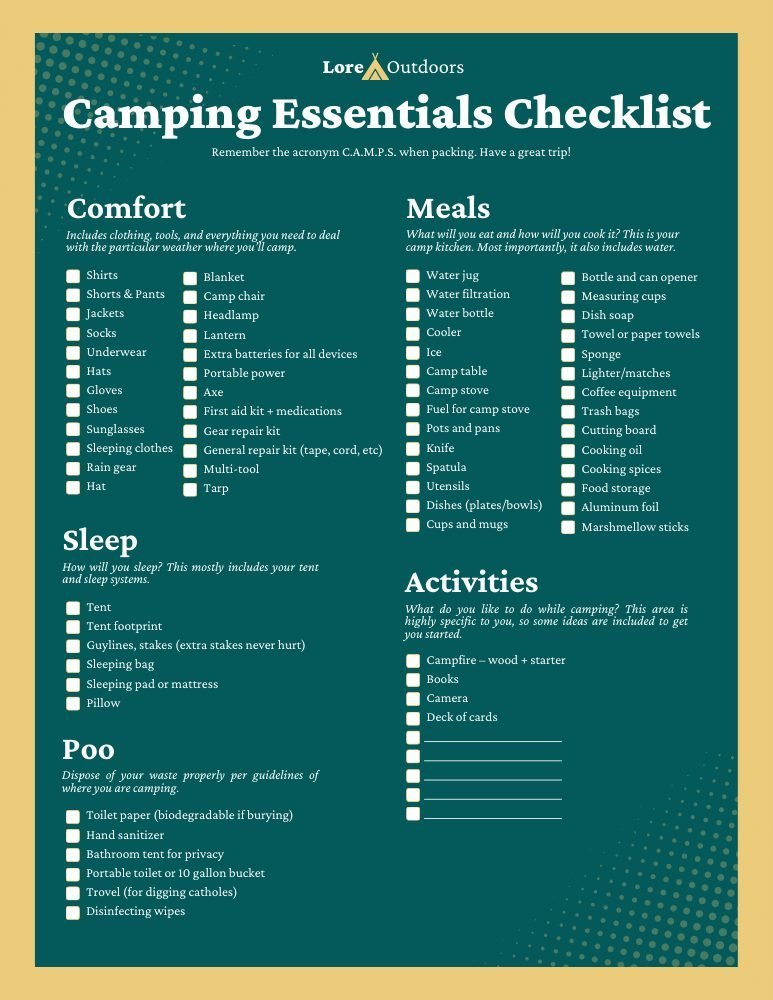
Camping is one of the most rewarding ways to experience the outdoors. Sleeping under the stars, cooking over a campfire, and waking up to birdsong instead of traffic noise are experiences that stay with you forever. But if you have never camped before, the sheer amount of gear advice and skill requirements can feel intimidating. The good news is that camping does not require a massive investment or decades of experience. It requires a few solid pieces of gear, some basic skills, and the willingness to trade comfort for adventure.
This guide breaks down everything you need for your first camping trip. We cover shelter selection, sleeping systems that keep you warm and comfortable, cooking gear that makes camp meals enjoyable, safety essentials, and the practical skills that separate an enjoyable trip from a miserable one. Whether you plan to car camp at a established campground or venture into the backcountry, these fundamentals apply across the board.
Choosing Your Shelter: Tents, Hammocks, and Tarps
Your shelter is your home away from home, and choosing the right one depends on where and how you camp. For most beginners, a freestanding three-season tent is the best investment. These tents balance weight, weather protection, and ease of setup. Look for a model with color-coded poles that make assembly intuitive, a full-coverage rainfly that keeps water out even in sustained rain, and mesh panels that provide ventilation on warm nights. A two-person tent offers generous space for one person plus gear, while families or couples may prefer a four-person model.
Hammock camping has gained popularity in recent years and offers unique advantages for certain environments. Hammocks are lighter than tents, keep you off uneven or wet ground, and provide exceptional comfort for side sleepers. However, they require trees spaced appropriately, an underquilt or insulating pad to prevent cold butt syndrome, and a rain tarp for weather protection. Tarps and bivy sacks are ultralight options favored by experienced backpackers but are less forgiving for beginners due to condensation management and exposed sleeping arrangements.
Whichever shelter you choose, practice setting it up at home before your first trip. There is nothing worse than arriving at a campsite in fading light, tired from travel, and realizing you do not know how your tent poles fit together. A dry run in your backyard reduces stress and ensures you have all the components.
According to the Outdoor Industry Association, more than 50 million Americans went camping in 2023, making it one of the fastest-growing outdoor activities. Tent sales have increased by over 30 percent since 2019 as more people discover the joys of sleeping outdoors.
Sleeping Systems: The Difference Between Rest and Misery
A good night's sleep is the difference between an enjoyable camping trip and a miserable one. Your sleeping system consists of three components: a sleeping bag or quilt, a sleeping pad, and a pillow. All three work together to keep you warm, comfortable, and insulated from the ground, which is the primary source of heat loss in camping scenarios.
Sleeping bags are rated by temperature, and the rating indicates the lowest temperature at which an average sleeper can remain warm. For three-season camping that covers spring, summer, and fall, look for a bag rated between twenty and thirty degrees Fahrenheit. Down insulation offers the best warmth-to-weight ratio and compresses smallest, but synthetic insulation performs better when wet and costs less. Choose based on your typical camping environment and budget.
Your sleeping pad is arguably more important than your sleeping bag for overall comfort. The pad provides cushioning against rocks and roots and creates an insulating barrier between your body and the cold ground. A pad with an R-value of three or higher is appropriate for three-season use. Inflatable pads offer the best comfort and pack size, while closed-cell foam pads are indestructible and budget-friendly but less plush. Many campers combine a foam pad with an inflatable pad for maximum warmth and comfort in colder conditions.
Camp Cooking: From Simple to Gourmet
Camp cooking ranges from minimalist freeze-dried meals to elaborate Dutch oven feasts. For beginners, the sweet spot is simple, hot meals that require minimal cleanup. A two-burner propane camp stove provides reliable cooking power for car camping. Pair it with a lightweight pot set that includes a pot, pan, and kettle. A single titanium or aluminum pot with a nesting cup works well for backpacking.
Plan meals that require minimal preparation and share common ingredients. Oatmeal with dried fruit for breakfast, tortilla wraps with shelf-stable ingredients for lunch, and one-pot pasta or rice dishes for dinner are reliable choices. Prep ingredients at home, storing them in labeled zip-top bags or reusable containers. Remember that camp cooking cleanup requires biodegradable soap, a scrub sponge, and a collapsible wash basin. Follow Leave No Trace principles by washing at least 200 feet from natural water sources and straining food scraps into your trash bag.
Safety and First-Aid Preparedness
A well-stocked first-aid kit is non-negotiable on any camping trip. Your kit should include adhesive bandages in multiple sizes, sterile gauze pads, medical tape, antiseptic wipes, antibiotic ointment, pain relievers, antihistamines for allergic reactions, tweezers for splinters and ticks, mole skin for blister prevention, and an emergency blanket. Add any personal medications you require.
Beyond the first-aid kit, every camper should carry a headlamp with fresh batteries, a whistle for emergencies, a fire starter or waterproof matches, and a multi-tool. Know the location of the nearest hospital or urgent care center before you leave home. Cell service is unreliable in many camping areas, so download offline maps and inform someone of your itinerary, including your expected return time.
Camping skills improve with practice. Your first trip may involve some trial and error, but each outing teaches you something about your preferences, your gear, and your capabilities. Start with a single night at a established campground close to home. Keep a journal of what worked and what you would change next time. Build on each experience gradually, and you will develop the confidence and knowledge to handle any camping scenario.
For a curated selection of camping gear recommendations, trip planning guides, and tips from experienced outdoor enthusiasts, check out Trail & Summit. You will find detailed gear reviews, campsite recommendations, and practical advice that turns first-time campers into lifelong outdoor lovers.