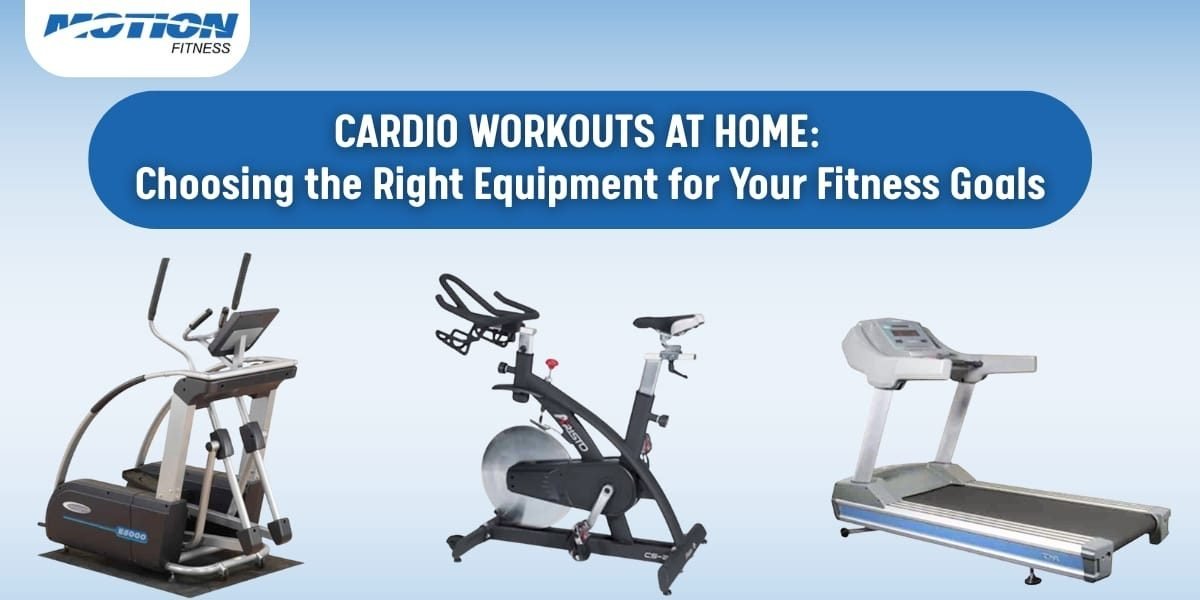
The treadmill stares at you. So does the stationary bike, the rowing machine, and that intimidating row of kettlebells near the mirror. You have 30 minutes to work out. Which one do you choose? The answer depends on what you want to achieve — and that is the part most advice leaves out.
Cardio is not one thing. It is a spectrum of activities, each producing different physiological adaptations. Some build endurance. Some improve power. Some torch calories quickly. Others support recovery and long-term heart health. The "best" cardio workout does not exist — but the best one for your specific goals absolutely does.
This guide breaks down the major types of cardio, what each one is good for, and how to choose based on your fitness level, schedule, and objectives. Whether you want to run a marathon, lose weight, or just stay healthy, there is a cardio routine that fits.
Steady-State Cardio: The Foundation
Steady-state cardio (also called LISS — Low-Intensity Steady State) involves maintaining a consistent pace for an extended period, typically 30-60 minutes. Your heart rate stays in the 60-70% of maximum range. You can hold a conversation, but you are breathing harder than at rest. Examples include jogging, brisk walking, cycling at a moderate pace, swimming laps, or using an elliptical.
LISS is excellent for building aerobic base — the efficiency of your heart, lungs, and circulatory system. A strong aerobic base improves recovery between high-intensity efforts, reduces resting heart rate, and enhances overall energy levels. It is also the safest form of cardio for beginners and those with joint concerns.
The common mistake with LISS is going too hard. If you are breathing heavily and cannot speak in full sentences, you have crossed into threshold work. Back off. The goal is steady, sustainable effort. The "zone 2" training popularized by athletes like Inigo San-Millan is exactly this — low enough to be sustainable, high enough to drive meaningful cardiovascular adaptation.
Walking is the most underrated form of LISS. A 30-minute brisk walk burns roughly 100-150 calories, improves circulation, aids digestion, and clears mental fog. It requires no equipment, no gym membership, and no recovery time. Do not discount walking as "not real exercise" — it is arguably the most sustainable physical activity humans can do.
HIIT: Maximum Results in Minimum Time
High-Intensity Interval Training alternates between short bursts of all-out effort and periods of active recovery. A typical HIIT session lasts 15-25 minutes, including warm-up and cool-down. The work intervals are intense enough that you cannot maintain them for more than 30-90 seconds at a time.
HIIT produces a phenomenon called EPOC (Excess Post-Exercise Oxygen Consumption) — your body continues burning calories at an elevated rate for hours after the workout. This "afterburn effect" is significantly higher than with steady-state cardio. HIIT also improves anaerobic capacity, insulin sensitivity, and cardiovascular health in less total time.
The catch is that HIIT is demanding. It requires proper warm-up, good joint health, and honest effort. A half-hearted HIIT session is not HIIT — it is just intervals. You should be genuinely uncomfortable during work intervals. If you can sing or speak normally, you are not working hard enough.
Beginners should start with a 1:3 work-to-rest ratio — 20 seconds of work followed by 60 seconds of recovery, repeated 6-8 times. As fitness improves, progress to 1:2 (30:60), 1:1 (30:30), and eventually 2:1 (40:20). Limit HIIT to 2-3 sessions per week with at least 48 hours between sessions.
A 2019 meta-analysis in the British Journal of Sports Medicine found that HIIT produces similar or greater improvements in cardiorespiratory fitness compared to moderate-intensity continuous training, despite requiring about 40% less time commitment. Quality beats quantity for cardiovascular adaptations.
Running: The Most Accessible High-Impact Cardio
Running requires nothing but a pair of shoes and a door. It improves cardiovascular fitness, bone density, and mental health. The "runner's high" is a real phenomenon — your body releases endocannabinoids during sustained running that produce feelings of euphoria and reduced anxiety.
But running is also high-impact. Each foot strike transmits 2-3 times your body weight through your legs. Beginners often try to do too much too soon and develop shin splints, runner's knee, or plantar fasciitis. The 10% rule — never increase weekly mileage by more than 10% — exists for a reason.
A common misconception is that running destroys your knees. Research published in the Journal of Orthopaedic & Sports Physical Therapy found that recreational runners have lower rates of knee osteoarthritis than both sedentary people and competitive runners. The key is moderation, proper footwear, and incorporating strength training to support your joints.
For beginners, start with a run-walk program: run for 1 minute, walk for 2 minutes, repeat for 20 minutes. Gradually increase the running intervals and decrease the walking as your fitness improves. The couch-to-5K program is a proven framework for this progression.
Cycling: Low Impact, High Output
Cycling is arguably the most versatile cardio modality. It is low-impact (making it accessible for people with joint issues), can be done indoors or outdoors, and scales from gentle recovery rides to all-out sprints. Stationary bikes allow precise control of resistance and power output, making it easy to structure interval workouts.
Outdoor cycling adds the variable of terrain, wind resistance, and navigation, which makes it more engaging but harder to control intensity. Indoor cycling (spin classes or smart trainers) provides structured workouts with measurable power output. Peloton, Zwift, and TrainerRoad are popular platforms for indoor cycling.
The effectiveness of cycling depends on effort. Many people coast on a bike, thinking they are working hard when their heart rate is barely elevated. To get cardiovascular benefit, you need sustained effort — either steady resistance that makes your legs work continuously or intervals that spike your heart rate.
For the best results, include both steady-state rides (45-60 minutes at moderate pace) and interval sessions (30-second sprints with 90-second recovery, repeated 8-10 times). Cycling develops the quadriceps and glutes significantly, making it an excellent complement to running or strength training.
Swimming: Full-Body, Zero Impact
Swimming is the only cardio modality that works every major muscle group simultaneously while placing zero impact on your joints. The water provides natural resistance in all directions, making it exceptionally efficient for building muscular endurance alongside cardiovascular fitness.
The challenge of swimming is the skill requirement. Unlike running or cycling, swimming requires technique to be effective. Poor form leads to inefficient movement, wasted energy, and frustration. Even reasonably fit people often find themselves winded after a single lap because they are fighting the water rather than flowing with it.
If you are new to swimming for fitness, consider taking a few lessons or watching technique videos focused on front crawl (freestyle). Key points: exhale steadily into the water (do not hold your breath), rotate your body with each stroke, and keep your fingers slightly apart to create a better paddle.
Swimming is ideal for recovery days, for people with joint conditions, and as cross-training for runners and cyclists. A 30-minute continuous swim at moderate intensity burns roughly 200-300 calories while building upper body, core, and lower body endurance simultaneously.
Choosing Your Cardio Mix
Most people benefit from a mix of cardio modalities. The World Health Organization recommends 150-300 minutes of moderate-intensity or 75-150 minutes of vigorous-intensity aerobic activity per week. Here is how to build a balanced weekly cardio schedule based on your primary goal:
For general health: 3-4 sessions of LISS (walking, easy cycling, or swimming) at 30-45 minutes each. Add one HIIT session if you enjoy it. The goal is consistency and enjoyment — the best cardio is the one you keep doing.
For fat loss: 3 LISS sessions (45-60 minutes) plus 2 HIIT sessions (20-25 minutes). Keep your diet in a modest calorie deficit with adequate protein. HIIT boosts metabolic rate for hours afterward; LISS burns additional calories without increasing appetite as much as HIIT can.
For endurance events: 4-5 sessions per week, with 80% at low-to-moderate intensity (zone 2) and 20% at high intensity. This polarized approach, used by elite endurance athletes, builds aerobic capacity while preserving recovery.
For heart health: 150 minutes of moderate-intensity cardio per week, spread across at least 3 sessions. Consistency matters more than intensity. A 30-minute daily walk reduces cardiovascular disease risk by 20-30% compared to being sedentary.
The most important factor is finding cardio you actually enjoy. If you dread your workout, you will not sustain it. Try different modalities, mix them up, and pay attention to how each one makes you feel. Ready to build your personalized cardio plan? Explore structured programs and detailed workout guides at Fit Forge's Cardio Library.