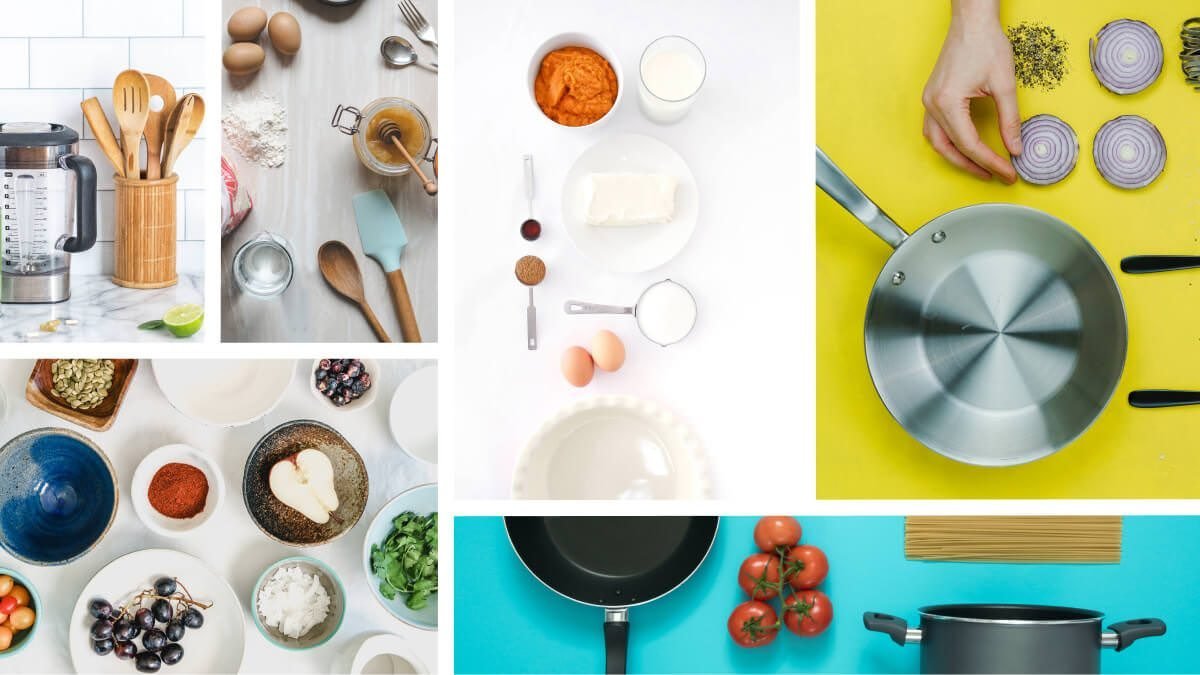
Standing in the kitchen aisle of a department store is overwhelming. Rows of knives, pots, pans, gadgets, and gizmos all promise to make you a better cook. The truth is most of them will end up in a drawer, used once and forgotten. A well-equipped kitchen does not need thirty tools. It needs the right ten — chosen carefully, maintained properly, and used daily.
Building a kitchen toolkit is an investment. Good tools last decades, while cheap ones need replacing every year. But "good" does not mean "most expensive." Entry-level professional brands like Victorinox, Lodge, and Oxo outperform many premium consumer brands at half the price.
This guide walks you through the essential kitchen tools every home cook needs, why each one matters, and how to choose quality without overspending. We also highlight which tools to skip — the ones that clutter drawers and complicate cooking instead of simplifying it.
The Chef's Knife: Your Most Important Tool
An 8-inch chef's knife is the single most important tool in your kitchen. It handles 90% of cutting tasks: chopping vegetables, slicing meat, dicing herbs, crushing garlic, and even deboning small poultry. A good chef's knife becomes an extension of your hand — you should reach for it automatically.
Do not buy a knife set. Knife sets include mediocre knives you will never use (bread knives, utility knives, steak knives). Instead, buy one excellent chef's knife. Victorinox Fibrox Pro (around $45) is the best value in professional kitchens worldwide. If your budget allows, upgrade to a Wusthof Classic or Zwilling Pro (around $150-200) — these hold an edge longer and feel more balanced.
The type of steel matters. German steel (Wusthof, Zwilling) is softer and easier to sharpen, making it forgiving for beginners. Japanese steel (Shun, Global) is harder, holds an edge longer, but is more brittle and requires careful handling. For most home cooks, German stainless is the better choice.
The common beginner mistake is buying a knife that is too small. An 8-inch blade might feel intimidating, but it gives you more control than a 6-inch "beginner" knife. The weight and length allow a smooth rocking motion for chopping. A smaller knife forces you into an inefficient up-and-down sawing motion.
Cast Iron Skillet: The Workhorse
A 12-inch cast iron skillet is the most versatile pan in any kitchen. It sears steaks with a crust that non-stick cannot match, bakes cornbread with a golden bottom, fries chicken evenly, and transitions from stovetop to oven without complaint. It is nearly indestructible and improved by decades of use.
Lodge is the standard for affordable cast iron — a 12-inch skillet costs around $25. You do not need the expensive enameled versions for most tasks. The key is seasoning: a layer of polymerized oil that creates a natural non-stick surface. New Lodge skillets come pre-seasoned but benefit from additional seasoning layers.
Maintenance is simpler than most people think. After cooking, rinse with hot water and scrub with a stiff brush. Soap is optional — modern dish soap is mild enough not to damage seasoning. Dry immediately on the stovetop over low heat, then rub with a thin layer of oil while still warm. Avoid soaking, dishwasher, and acidic foods for long periods (tomato sauce can strip seasoning if left too long).
A common concern is weight — a 12-inch cast iron skillet weighs about 8 pounds. If that is too heavy, consider carbon steel. It offers similar performance at half the weight, heats faster, and develops the same non-stick seasoning. De Buyer and Matfer Bourgeat are the professional standards.
Cutting Board: Protect Your Knife
Your knife is only as good as the surface you cut on. A good cutting board protects your knife edge, provides a stable cutting surface, and resists bacterial growth. Wood — especially maple, walnut, or teak — is the best material. It is gentle on edges, has natural antimicrobial properties, and small knife marks close up over time.
Size matters: get the largest board that fits comfortably on your counter. A small board forces you to crowd ingredients, which leads to accidents. Boards 18x24 inches or larger give you room to work without piling everything on the edge.
Plastic boards are cheaper and dishwasher-safe but develop deep grooves that harbor bacteria. Replace plastic boards when they become heavily scored. Bamboo is harder than maple and can dull knives faster, but it is sustainable and affordable if budget is a concern.
Maintain your board with mineral oil (food-grade, not motor oil) every few weeks. Apply a generous coat, let it absorb overnight, and wipe off excess. This prevents drying and cracking and extends the board's life significantly.
Essential Cookware: Pots and Pans
You do not need a twelve-piece cookware set. Start with three pieces: a 12-inch skillet (cast iron or stainless), a 4-quart saucepan, and an 8-quart stockpot or Dutch oven. These three handle nearly every cooking technique: sautéing, searing, boiling, simmering, braising, and stock-making.
For the saucepan and stockpot, stainless steel with an aluminum or copper core is ideal. The aluminum core distributes heat evenly, preventing hot spots that cause burning. All-clad is the gold standard, but Tramontina and Cuisinart offer excellent tri-ply options at half the price.
A Dutch oven — heavy enameled cast iron pot — is worth considering as your first upgrade. It excels at braising, deep-frying, bread baking, and soup-making. A 5.5-7 quart size is most versatile. Le Creuset is iconic but expensive; Lodge enameled Dutch ovens perform similarly at a fraction of the cost.
Avoid non-stick pans for everyday use. They cannot handle high heat (coating degrades above 500°F), require plastic utensils, and need replacement every 2-3 years. Reserve one small non-stick pan (8 or 10-inch) for eggs and delicate fish, and use stainless or cast iron for everything else.
Gadgets Worth Owning (And Ones to Skip)
The kitchen gadget industry thrives on convincing you that you need specialized tools for every task. The truth is that the best cooks use the fewest tools. Here is the short list of gadgets actually worth drawer space:
Digital thermometer: The single most useful gadget in your kitchen. Stop guessing when meat is done, when bread is baked, or when oil is ready for frying. Thermapen is the professional standard ($80-100), but a basic ThermoPro for $15 is 95% as good.
Microplane/zester: Ideal for garlic, ginger, citrus zest, hard cheese, and nutmeg. It outperforms every dedicated zester or grater for these tasks. A fine rasp costs about $15.
Fish spatula: Despite the name, this thin, slotted spatula is useful for eggs, cookies, pancakes, and delicate fish. Its flexibility and thin edge slide under food without breaking it. About $12.
Kitchen shears: For cutting poultry joints, snipping herbs, opening packages, and trimming fat. Buy a pair that comes apart for cleaning. About $15-25.
Gadgets to skip: Garlic press (faster to mince with a knife), avocado slicer (knife + spoon works better), egg slicer (same), mandoline (dangerous and hard to clean — practice knife skills instead), electric can opener (manual ones are faster and more reliable).
"A kitchen full of gadgets does not make a good cook. Ten well-chosen tools, maintained properly, are enough to create almost any dish." — A lesson from professional kitchens that applies to home cooking too.
Investing Wisely: Where to Spend and Where to Save
Not every kitchen tool deserves a premium budget. The general rule: spend on tools that touch your food (knives, cutting boards, cookware) and save on tools that provide structure or heat (shelving, oven mitts, mixing bowls).
Spend well on: Chef's knife ($100-200), cast iron skillet ($25-50), cutting board ($50-100), digital thermometer ($15-80), stainless steel saucepan ($60-100). These tools perform better with quality and last decades.
Save on: Mixing bowls (glass or stainless from IKEA are fine), measuring cups/spoons, kitchen towels, oven mitts, colander, vegetable peeler. Dollar-store quality is acceptable for many of these — they are simple by design.
Never cheap out on: Your chef's knife. A $15 knife is unsafe — it dulls quickly, requires excessive force, and slips. A $45 Victorinox is the minimum for safe, enjoyable cooking. The upgrade from $45 to $150 is noticeable but optional. The upgrade from $15 to $45 is essential.
Building a kitchen toolkit is a gradual process. Start with the chef's knife and cast iron skillet, then add pieces as your cooking evolves. A well-equipped kitchen grows with you — it does not come pre-packaged in a box set. For more detailed reviews of specific brands and budget breakdowns for every cooking style, check out the full gear guide at FlavorFusion's Kitchen Essentials.