Riding a motorcycle is one of the most exhilarating experiences on two wheels. The sense of freedom, the connection to the road, and the pure mechanical engagement create a riding experience that no car can replicate. But that freedom comes with inherent risks. Motorcyclists are significantly more vulnerable than car drivers, with statistics from the National Highway Traffic Safety Administration showing that per mile traveled, motorcyclists are about 28 times more likely to die in a crash than passenger vehicle occupants.
These numbers sound alarming, but they do not tell the whole story. The vast majority of motorcycle accidents involve factors that are preventable with proper training, equipment, and mindset. This guide covers the essential components of motorcycle safety. We examine protective gear that can save your life in a crash, defensive riding techniques that help you avoid accidents before they happen, weather-specific strategies, critical maintenance for safety, and the training opportunities that transform good riders into great ones. Safety is not about fear. It is about empowerment through knowledge and preparation.
Protective Gear: Your Second Skin
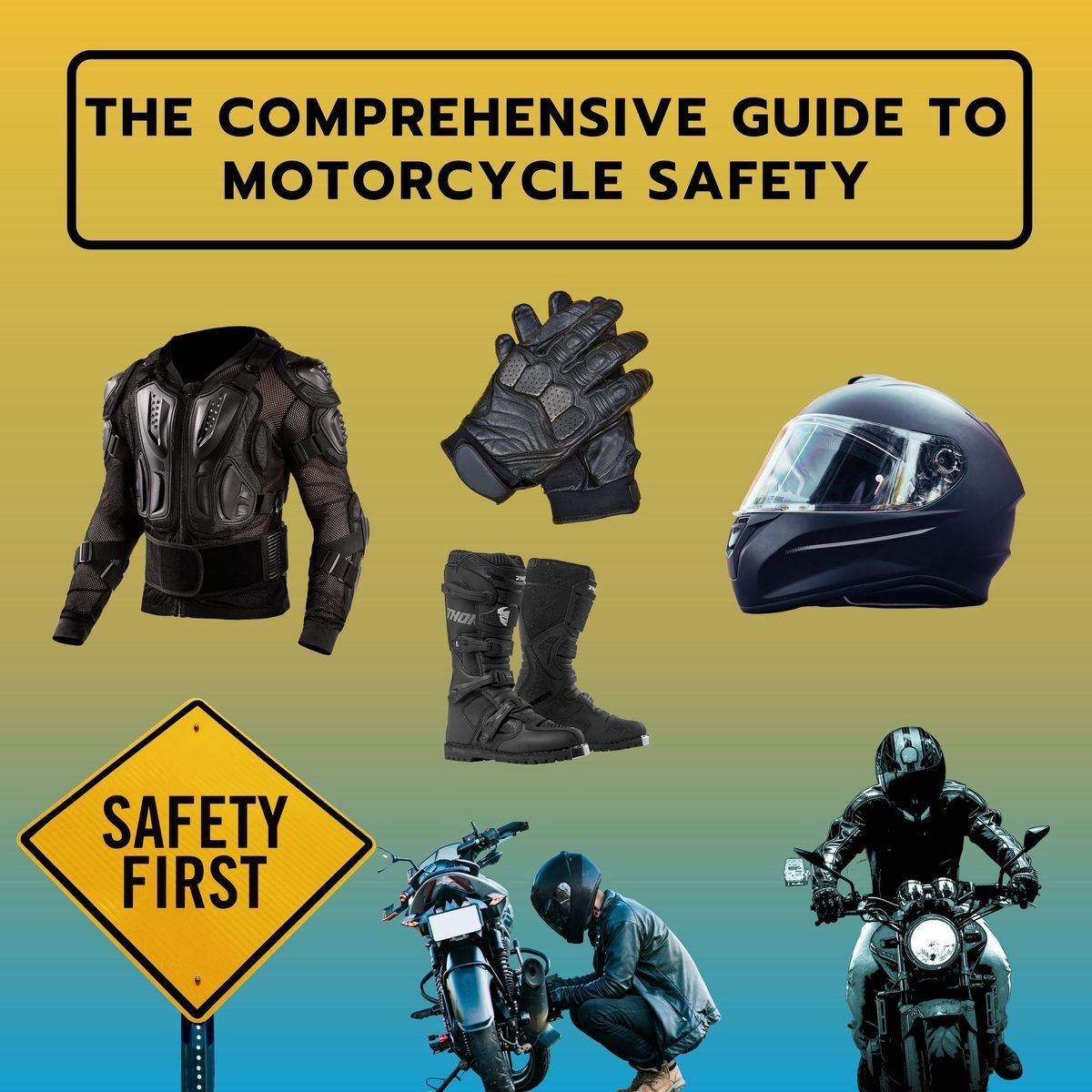
Your protective gear is the most important investment you will make as a motorcyclist. In a crash, it is the only thing between your body and the pavement. The helmet is non-negotiable. A full-face helmet certified by DOT or ECE standards provides comprehensive protection for your head, face, and brain. Studies consistently show that helmets reduce the risk of head injury by approximately 69 percent and the risk of death by 37 percent. Full-face helmets offer significantly more protection than open-face or half-shell designs because they protect your jaw and face in addition to your skull. Always buy a new helmet, as internal materials degrade over time and a used helmet may have hidden impact damage.
A motorcycle jacket with integrated armor protects your shoulders, elbows, and back. Look for jackets made from abrasion-resistant materials like leather or high-denier cordura nylon, with CE-rated armor at impact points. Riding gloves protect your hands, which are often the first point of contact with the ground in a fall. Choose gloves with reinforced palms and knuckle protection. Over-the-ankle boots provide critical protection for your feet and ankles, which are vulnerable to crushing and twisting injuries. Dedicated riding pants with knee and hip armor complete the system. Mesh gear with armor inserts provides airflow for hot weather while maintaining protection.
The Hurt Report, a landmark study of motorcycle accident causation published in 1981 and still referenced today, found that approximately three-quarters of motorcycle accidents involved collision with another vehicle, most often one that turned left in front of the motorcyclist. Visibility and defensive positioning are your primary defenses against this most common crash scenario.
Defensive Riding Techniques
Defensive riding is the practice of actively positioning yourself to avoid hazards rather than simply reacting to them. It begins with visibility. Position yourself in the lane where other drivers are most likely to see you. In most situations, this means riding in the left or right tire track of the lane rather than the center, where oil and debris accumulate. Use your headlight at all times, and consider auxiliary lighting to increase your presence. Make eye contact with drivers at intersections, because if they do not see you, they may pull out in front of you.
Maintain a following distance of at least two seconds in ideal conditions and increase it to four or more seconds in rain, darkness, or heavy traffic. This gives you time to react to sudden stops and allows you to see road hazards before you reach them. Constantly scan your mirrors and be aware of vehicles approaching from behind. Always have an escape route in mind, whether it is the shoulder, a gap between lanes, or an open space where you can maneuver if a driver does not yield.
Smooth control inputs are the hallmark of a safe rider. Brake progressively, shift smoothly, and avoid sudden steering inputs that can upset the bike's stability. Practice emergency braking in a safe, empty parking lot until it becomes second nature. Combining front and rear brakes with progressive pressure stops you in the shortest distance without locking either wheel. Most modern motorcycles have ABS, which helps prevent wheel lockup during hard braking, but ABS is not a substitute for proper braking technique.
Weather and Road Condition Strategies
Riding in adverse conditions requires additional skills and precautions. Rain reduces visibility and traction dramatically. Reduce your speed, increase following distance, and avoid sudden inputs. Painted road markings, metal surfaces like manhole covers and bridge gratings, and fresh asphalt are especially slippery when wet. If you encounter standing water, reduce speed and ride through it upright without leaning. After riding through water, test your brakes to dry them.
Night riding carries additional risks due to reduced visibility. Ensure your headlight and taillight are clean and properly aimed. Wear gear with reflective elements. Reduce speed because your stopping distance exceeds your visible range at highway speeds. Watch for animals, especially at dawn and dusk when deer are most active. Fog, high winds, and extreme temperatures each present their own challenges. The key is to know your limits and be willing to wait out conditions that exceed your skill level. There is no shame in pulling over and waiting for weather to pass.
Maintenance That Saves Lives
Your motorcycle's mechanical condition directly affects your safety. The Motorcycle Safety Foundation recommends a T-CLOCK pre-ride inspection before every ride. T-CLOCK stands for Tires and wheels, Controls including brakes and clutch, Lights and electrical systems, Oil and other fluids, Chassis including suspension and chain, and Kickstand. This inspection takes less than five minutes and can identify problems before they cause a crash.
Tires are the most critical safety component on your motorcycle. Check tire pressure when the tires are cold, using the manufacturer's recommended pressure. Inspect tread depth and look for cuts, bulges, or embedded objects. Replace tires when tread depth approaches 2/32 of an inch. Brakes should feel firm and progressive. Check brake fluid level and look for leaks around calipers and master cylinders. Your chain should be properly tensioned and lubricated, with no tight spots or damaged links. Follow your owner's maintenance schedule religiously, and never ride a bike with known mechanical issues.
Motorcycle safety is a continuous practice, not a one-time lesson. It evolves with every mile you ride. Take advanced riding courses, practice your skills regularly, and always ride within your limits. The goal is not just to arrive at your destination, but to enjoy every mile along the way, confident in your skills and your machine.
For detailed motorcycle safety guides, gear reviews, and training resources, explore MotoPulse. You will find expert advice and community-driven content to help you ride smarter and safer on every journey.