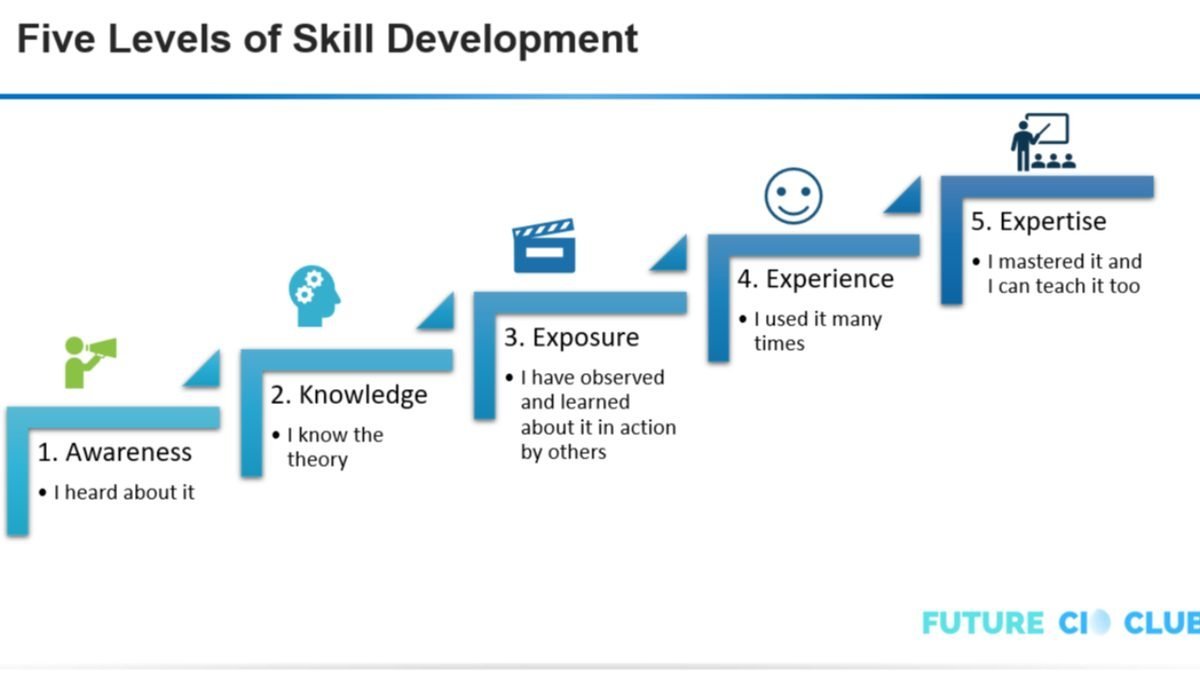
In a world where industries evolve rapidly and careers span decades, the ability to learn new skills is no longer optional — it is essential. The half-life of professional skills has shrunk dramatically. What made you valuable five years ago may be irrelevant today. Skill development is the insurance policy against obsolescence and the engine of career growth.
But not all skill development is equal. Many people spend hundreds of hours on learning plateaus, making slow progress despite significant effort. The difference between those who master skills quickly and those who stagnate often comes down to strategy rather than talent. This guide outlines a systematic approach to building expertise in any field.
Deliberate Practice: The Gold Standard
Anders Ericsson's research on expert performance introduced the concept of deliberate practice, and it remains the most effective method for skill acquisition. Deliberate practice is not simply repeating a task. It is a structured, goal-oriented activity with specific characteristics.
First, it targets your current edge of competence. You work on skills that are just beyond your current ability, not what you can already do comfortably. Second, it requires immediate feedback. You need to know whether you performed correctly so you can adjust. Third, it demands full concentration. Deliberate practice is mentally exhausting, which is why most people avoid it — but it is also why it produces results.
A meta-analysis published in the journal Psychological Science found that deliberate practice accounted for 26% of the variance in performance across domains like music, sports, and education. While talent plays a role, structured practice is the most controllable factor in skill development.
To apply deliberate practice, identify the specific sub-skills within your target domain. Break each one down and practice the components you find most difficult. Record your performance, seek feedback from a coach or peer, and repeat the cycle. Each iteration should have a clear objective: improving one specific aspect.
The 20-Hour Rule: Overcoming the Initial Barrier
The biggest obstacle to skill development is the initial frustration period. The first few hours of learning anything new feel awkward and unproductive. This is where most people give up. Josh Kaufman's 20-hour rule offers a practical way through this phase.
The premise is straightforward: you can become reasonably competent at any skill with about 20 hours of focused practice. The key is deconstructing the skill into manageable sub-skills, learning enough to self-correct, removing practice barriers, and committing to 20 hours. The first hour feels painful. By hour ten, you see progress. By hour twenty, you are functional.
This approach works because it addresses the psychological barrier of skill acquisition. Instead of aiming for mastery from day one, aim for basic competence. Once you are competent, motivation often returns naturally because the activity becomes enjoyable rather than frustrating.
Micro-Credentials: Building Credible Expertise
Traditional degrees are no longer the only signal of expertise. Micro-credentials — short, focused certifications — have gained significant traction among employers. Google Career Certificates, IBM Professional Certificates, and industry-specific credentials from organizations like HubSpot, AWS, and Salesforce provide verifiable proof of skills.
The advantages are clear: micro-credentials are affordable, flexible, and directly tied to job market needs. They allow you to build expertise incrementally, stacking credentials as your career develops. For career changers, they are particularly valuable because they demonstrate commitment and foundational knowledge without requiring a return to school.
When selecting micro-credentials, prioritize programs that include hands-on projects and assessments rather than passive video consumption. The credential is only as valuable as the learning it required. Look for programs affiliated with reputable universities or major employers in your target industry.
Career Pivoting Through Strategic Skill Development
Changing careers is one of the most significant applications of skill development. The process involves three phases: assessment, bridging, and demonstration.
In the assessment phase, identify your transferable skills. Communication, project management, analytical thinking, and leadership are valuable across industries. Map these against the requirements of your target role to identify gaps. The bridging phase is where you acquire the missing skills through courses, certifications, or projects. The demonstration phase involves building a portfolio that showcases your new capabilities.
Building a Personal Learning System
Effective skill developers do not rely on motivation alone. They build systems that make learning inevitable. A personal learning system includes regular time blocks dedicated to practice, a feedback mechanism like a mentor or peer group, and a tracking method to measure progress over time.
One effective approach is the 80/20 rule applied to learning: identify the 20% of skills that will deliver 80% of the results. In most fields, a core set of fundamental skills underpins everything else. Master those first, and everything else becomes easier.
Document your learning journey. Keeping a skill journal where you record what you practiced, what you learned, and what you found difficult creates a record of progress that sustains motivation. It also helps identify patterns in your learning that you can optimize over time.
Skill development is a lifelong investment with compounding returns. Every new skill you acquire opens doors to opportunities you could not access before. The best time to start was years ago. The second best time is today.
Overcoming Plateaus and Staying Motivated
Every skill development journey hits plateaus. Progress stalls, frustration builds, and the temptation to quit grows strong. Plateaus are not a sign that you have reached your limit. They are a normal part of the learning curve where your brain is consolidating what you have learned before the next leap forward.
The best way through a plateau is to change your approach. If you have been practicing the same drills, try a different method or a harder challenge. Seek feedback from someone more skilled. Take a short break to let your subconscious integrate what you have learned. Often, returning after a few days off reveals progress you did not notice while you were in the middle of it.
Accountability is a powerful motivator. Join a learning community, find a study partner, or share your goals publicly. The social commitment to show progress can carry you through moments when internal motivation fades. Document your journey publicly or in a private journal. Looking back at where you started provides perspective when progress feels slow.
Ready to take the next step in your learning journey? Learn Forge offers structured programs designed to help you build expertise systematically, with guided learning paths and industry-recognized certifications.