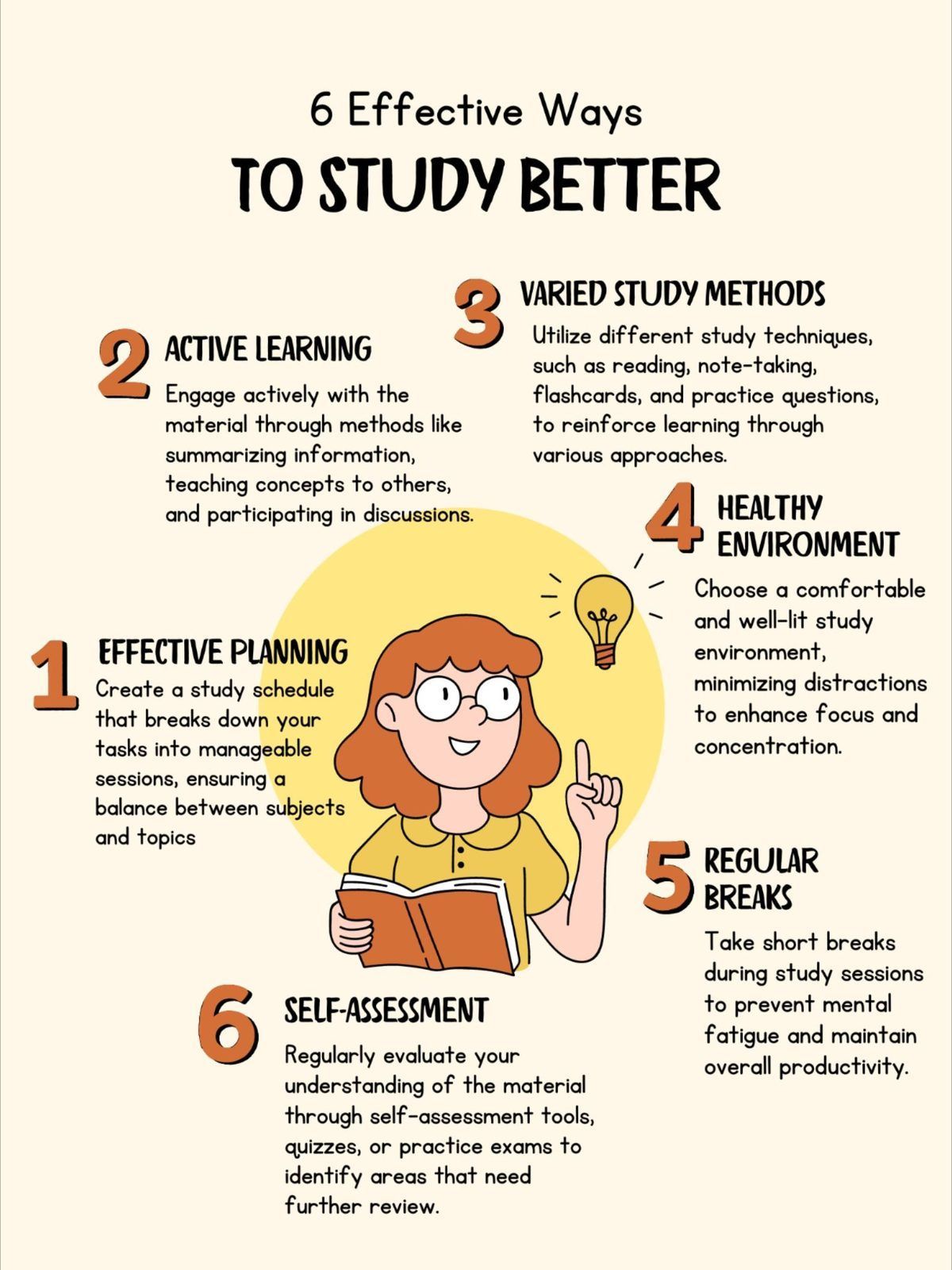
For years, most of us relied on the same study habits we developed in high school: highlight key passages, re-read notes, cram before exams. The problem? Cognitive scientists have known for decades that these methods are among the least effective ways to learn. They feel productive but create only the illusion of familiarity.
The good news is that research has identified a set of study techniques that genuinely work. These methods are backed by hundreds of studies and can be applied to any subject, from language learning to advanced mathematics. This guide covers the five most powerful techniques and how to integrate them into your daily study routine.
Active Recall: The Foundation of Effective Learning
Active recall is the single most impactful study technique you can adopt. The principle is simple: instead of passively reviewing material, you actively retrieve it from memory. Close the book, look away from the screen, and force yourself to recall the key points. This act of retrieval strengthens neural connections and signals to your brain that the information is important enough to keep.
Studies consistently show that students who use active recall outperform those who use passive methods by a wide margin. In one landmark study, participants who practiced active retrieval retained over 50% more information after a week compared to those who simply re-read the material.
Dr. Henry Roediger's research at Washington University demonstrated that a single active recall session can be more effective than multiple passive review sessions. The act of retrieving knowledge fundamentally changes how it is stored.
To implement active recall, use flashcards, practice questions, or simply pause every few minutes to summarize what you have just learned without looking at your notes. The effort of retrieval — even when you struggle — is what makes the memory stronger.
Spaced Repetition: Timing Is Everything
Spaced repetition takes active recall and optimizes its timing. Instead of reviewing material once, you revisit it at increasing intervals: after one day, then three days, then a week, then a month. Each review session catches the memory just as it begins to fade, reinforcing it and pushing it further into long-term storage.
The concept is rooted in the spacing effect, one of the most robust findings in cognitive psychology. First discovered by Hermann Ebbinghaus in the 1880s, the spacing effect shows that distributed practice produces far superior retention compared to massed practice or cramming.
Digital tools make spaced repetition effortless. Apps like Anki, Quizlet, and RemNote use algorithms to schedule reviews at optimal intervals. After you answer a flashcard, the app determines when to show it again based on how easily you recalled it. Difficulty determines frequency — harder cards appear sooner, easier cards appear later.
The Pomodoro Technique: Managing Mental Energy
Even the best study techniques fail if you cannot maintain focus. The Pomodoro Technique addresses this by breaking study sessions into manageable intervals. You work for 25 minutes with full concentration, then take a 5-minute break. After four cycles, take a longer break of 15 to 30 minutes.
The beauty of this method is its psychological simplicity. Twenty-five minutes is short enough that procrastination feels unnecessary — anyone can focus for 25 minutes. The frequent breaks prevent mental fatigue and keep your mind fresh. Over time, you train your brain to enter a focused state quickly and reliably.
For best results, protect your Pomodoro sessions from interruptions. Turn off notifications, close unnecessary tabs, and let people around you know you are in a focus block. Use the breaks to stretch, hydrate, or look away from the screen to reduce eye strain.
The Feynman Technique: Teaching to Learn
Named after the legendary physicist Richard Feynman, this technique is deceptively simple: explain a concept in plain language as if teaching it to someone who knows nothing about the subject. The process forces you to identify gaps in your understanding that you did not realize existed.
Here is how it works. Choose a topic and write down everything you know about it as simply as possible. Avoid jargon and technical terms unless you can define them in everyday language. When you get stuck or find yourself using vague language, you have found a gap in your knowledge. Go back to your source material, fill the gap, and try again.
The Feynman Technique is especially powerful for complex subjects like physics, economics, or programming. It transforms passive understanding into active mastery. If you cannot explain it simply, you do not understand it well enough.
Interleaving: Mixing It Up
Most study sessions are blocked — you practice one type of problem repeatedly before moving to the next. This feels effective, but interleaving, or mixing different types of problems in a single session, produces better long-term learning.
Interleaving forces your brain to constantly identify which strategy or formula applies to each problem, rather than mindlessly executing the same procedure. This added difficulty during practice translates to stronger recall during tests and real-world application.
To apply interleaving, mix practice problems from different chapters or topics within a single study session. If you are learning math, alternate between algebra, geometry, and statistics. If you are studying a language, mix vocabulary, grammar, and listening comprehension. The initial frustration is a sign that learning is occurring.
Combining these five techniques creates a powerful learning system. Use active recall to retrieve knowledge, spaced repetition to schedule reviews, Pomodoro to maintain focus, the Feynman Technique to deepen understanding, and interleaving to build flexible knowledge. Start with one technique, master it, then add another. Your study sessions will never be the same.
Building a Personalized Study System
The most effective learners do not rely on a single technique. They combine multiple strategies into a personalized system that adapts to their goals, schedule, and learning style. Start your study session with a Pomodoro timer to establish focus. Use active recall to test your understanding of the previous session's material. Apply the Feynman Technique to any concept you find challenging. End each session by identifying what you will review in your next spaced repetition cycle.
The key is consistency over intensity. Thirty minutes of focused, technique-driven study every day produces better results than four hours of passive reading once a week. Track your sessions in a simple journal or app, noting which techniques you used and how well you retained the material. Over time, you will discover which combinations work best for different subjects and adjust accordingly.
Remember that learning is a skill in itself. The more you practice studying effectively, the better you become at it. The techniques described here are not quick fixes but lifelong tools. Start with one, master it, add another, and watch your learning transform.
For structured learning paths, detailed guides, and resources to apply these techniques effectively, visit Learn Forge, where you will find courses and tools designed around evidence-based learning principles.