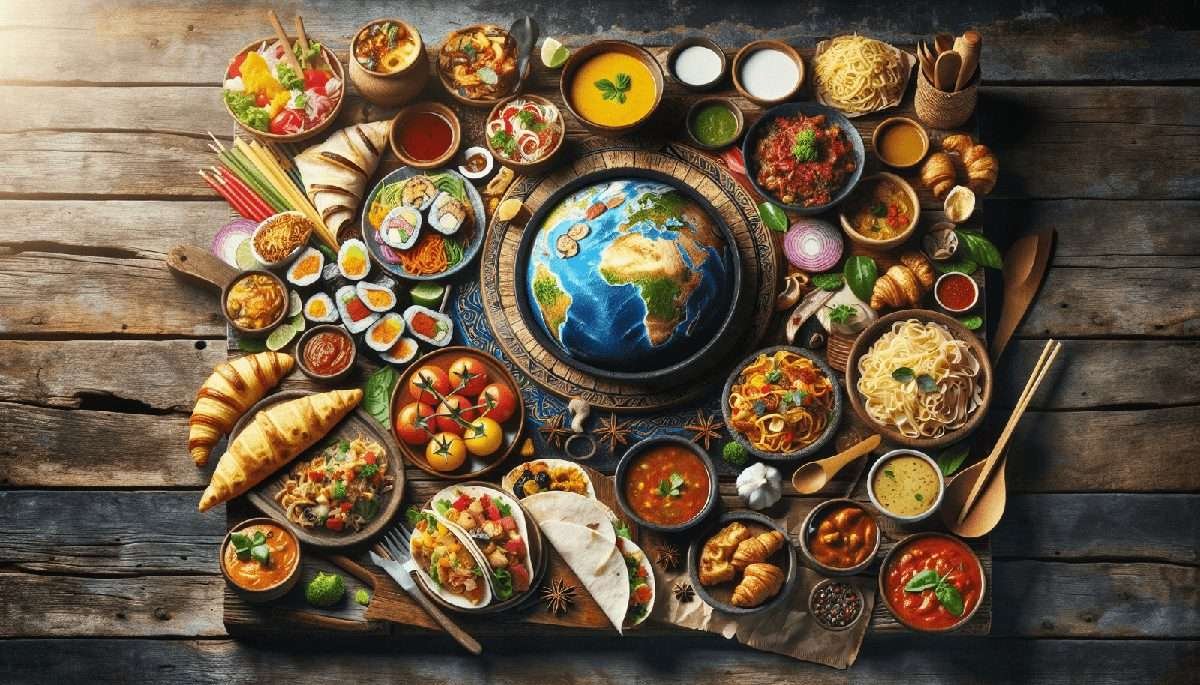
You walk into a grocery store and stare at a shelf of soy sauces — light, dark, sweet, mushroom-flavored. Which one do you need for that stir-fry recipe you bookmarked? Or maybe last week you tried a Thai green curry that blew your mind, and now you are wondering how to recreate that depth of flavor at home. The world of global cuisine can feel vast and intimidating, but the truth is every culinary tradition shares the same foundation: fresh ingredients, technique, and a desire to bring people together.
What we call "cuisine" is simply a region's answer to three questions: what grows here, what preserves well, and what tastes good together. Once you understand this, exploring world cuisines becomes less about memorizing recipes and more about discovering how different cultures solve the same problem — making delicious food. In this guide, we will walk through seven major culinary traditions, what makes each one special, and practical ways to bring their flavors into your everyday cooking.
Whether you are a complete beginner or a home cook looking to expand your repertoire, understanding the building blocks of each cuisine will give you the confidence to experiment. Let us start our journey.
Italian Cuisine: The Art of Simplicity
Italian cooking is built on a philosophy of letting high-quality ingredients speak for themselves. A classic tomato sauce needs only San Marzano tomatoes, garlic, olive oil, and basil — and the magic is in the proportions and technique, not in a long list of ingredients. This approach makes Italian cuisine one of the most accessible for home cooks to start exploring.
The regional diversity within Italy is staggering. Northern regions like Lombardy and Piedmont use butter, rice, and rich cheeses like Parmigiano-Reggiano and Gorgonzola. Think creamy risottos and hearty polenta. Central regions like Tuscany emphasize simple grilled meats, bread-based soups like ribollita, and extra-virgin olive oil. Southern Italy and Sicily lean toward tomato-based sauces, seafood, citrus, and bold herbs like oregano.
A common mistake beginners make is thinking Italian food is heavy. In reality, a proper Italian meal is balanced — a light pasta course (primo), a protein with vegetables (secondo), and perhaps a small salad. Pasta is served as a first course, not a main, and portions are modest. The key takeaway? Quality over quantity. One perfect amatriciana made with good guanciale beats a loaded pasta bowl any day.
To start cooking Italian at home, invest in three things: a good extra-virgin olive oil, real Parmigiano-Reggiano (not the green can), and high-quality canned San Marzano tomatoes. With these, you can build a dozen classic sauces. Learn the basics at FlavorFusion's Italian Guide for step-by-step recipes and technique videos.
Japanese Washoku: Balance and Seasonality
Japanese cuisine, or washoku, was recognized by UNESCO as an Intangible Cultural Heritage in 2013 — and for good reason. Its foundation is the concept of ichiju-sansai (one soup, three sides), a meal structure designed for nutritional balance. A typical washoku meal includes rice, miso soup, a main protein (often grilled fish), and two vegetable side dishes. Each component is prepared to complement, not overpower, the others.
Umami is the star. This fifth taste, often described as savory depth, comes from dashi — a broth made from kombu (kelp) and katsuobushi (bonito flakes). Dashi forms the backbone of miso soup, noodle broths, simmered dishes, and dipping sauces. Understanding dashi is the single most important skill for cooking Japanese food at home.
Seasonality is not just a suggestion in Japan — it is a guiding principle. Chefs select ingredients at their peak and prepare them in ways that highlight that moment. Spring brings bamboo shoots and cherry blossom sweets. Summer features eel and cold soba noodles. Fall celebrates mushrooms and sweet potatoes. Winter is hot pot season with nabe and hearty root vegetables.
For the home cook, start with miso soup from scratch — it requires only dashi, miso paste, and whatever vegetables or tofu you have. From there, try a simple teriyaki (which is just soy sauce, mirin, and sugar simmered down) or tamagoyaki (rolled omelet). Avoid the common mistake of treating Japanese food as exclusively raw fish — the vast majority of washoku is cooked, gentle, and deeply comforting.
The Japanese phrase "shun" describes the moment an ingredient is at its absolute peak flavor. Cooking with shun in mind transforms simple dishes into extraordinary experiences.
Mexican Cuisine: Layers of Flavor
Mexican cuisine is one of the world's most complex, with techniques and ingredients developed over thousands of years. The foundation is the "trinity" of corn, beans, and chiles — domesticated by Mesoamerican civilizations long before Spanish contact. Corn is treated with lime (calcium hydroxide) in a process called nixtamalization, which unlocks nutrients and creates the distinctive flavor and texture of masa.
Moles are the crown jewel of Mexican cooking. Unlike the simple chocolate-based sauce many imagine, moles are intricate blends of dried chiles, nuts, seeds, spices, and sometimes chocolate, roasted and ground then simmered for hours. Oaxaca is famous for its seven moles, ranging from the deep, dark mole negro to the herbaceous mole verde. Each one tells a story of trade routes, indigenous techniques, and regional pride.
Salsas, by contrast, are fresher and quicker. A good salsa depends on technique — charring tomatoes and chiles on a comal (griddle) before blending adds smoky depth. The choice of chile defines the salsa: smoky chipotle, bright serrano, fruity habanero. Mexican cooking also relies heavily on epazote, hoja santa, and Mexican oregano — herbs that have no exact substitute in other cuisines.
Do not confuse Tex-Mex with authentic Mexican cuisine. Tex-Mex is heavy on yellow cheese, ground beef, and flour tortillas. Authentic Mexican uses fresh cheese (queso fresco), a wider range of meats (barbacoa, carnitas, chorizo), and corn tortillas almost exclusively. Both are delicious, but they are different traditions.
Indian Cuisine: The Spice Symphony
Indian cooking is defined by its mastery of spices — not just heat, but complex layering of flavors that unfold across a meal. The key technique is tadka (tempering): whole spices are fried in hot oil or ghee at the beginning or end of cooking to release their essential oils. Cumin seeds crackle, mustard seeds pop, curry leaves crisp — and the entire dish is transformed.
Regional diversity in India is enormous. North Indian cuisine features rich, creamy curries, tandoori cooking, and wheat-based breads like naan and roti. South Indian food is rice-based, with lentil soups (sambar), fermented rice crepes (dosa), and coconut in nearly everything. Coastal regions use fresh seafood and coconut milk. Each region has its own spice blends, cooking techniques, and foundational dishes.
A common misconception is that Indian food is always spicy-hot. Heat comes from chiles, which are optional in many dishes. The real complexity comes from spice blends like garam masala (warm spices like cardamom, cinnamon, cloves) and panch phoron (a five-spice mix used in Bengali cooking). If you are new to Indian cooking, start with a simple dal tadka — lentils tempered with cumin, garlic, and dried red chiles. It is forgiving, nutritious, and teaches the fundamental technique.
Build your Indian pantry gradually. Start with cumin seeds, mustard seeds, turmeric powder, coriander powder, garam masala, and dried red chiles. Add a pressure cooker for lentils and chickpeas. From there, the possibilities are endless.
Thai Cuisine: The Balance of Four Tastes
Thai cooking is built on a dynamic balance of four tastes: sweet, sour, salty, and spicy — and ideally all four appear in every dish. A classic pad Thai achieves this with tamarind (sour), fish sauce (salty), palm sugar (sweet), and bird's eye chiles (spicy). The balance is not a compromise; it is a deliberate tension that makes each bite exciting.
The mortar and pestle is the soul of Thai cuisine. Curry pastes are pounded from fresh ingredients — lemongrass, galangal, kaffir lime zest, shrimp paste, chiles, and coriander root. Each paste takes time and elbow grease, and the result has a freshness that jarred pastes cannot match. Making your own green curry paste even once will change how you think about Thai food.
Thai food is also deeply regional. Northern Thai cuisine (khao soi, sai oua sausage) is influenced by Burmese and Lao cooking, with less coconut milk and more bitter herbs. Northeastern Isan cuisine features grilled meats, sticky rice, and the iconic papaya salad (som tum). Southern Thai food is the spiciest, with heavy use of coconut milk, turmeric, and fresh seafood.
For beginners, start with a stir-fry like pad kra pao (basil chicken) — it requires only a wok, high heat, and the right combination of fish sauce, soy sauce, and holy basil. Avoid the mistake of thinking Thai food must be restaurant-quality on the first try. Like all cuisines, it takes practice.
Middle Eastern Cuisine: Hospitality on a Plate
Middle Eastern cooking is rooted in generosity. Meals are spread-style, with multiple small dishes (mezze) meant for sharing. The foundation ingredients — olive oil, chickpeas, lamb, eggplant, yogurt, rice, and flatbreads — appear in variations across Lebanon, Turkey, Iran, Israel, and the Gulf states. Each country puts its own spin on shared culinary heritage.
Technique matters as much as ingredients. Slow-cooking transforms tough cuts of lamb into falling-apart stews. Properly made hummus requires peeling each chickpea (yes, really) and using high-quality tahini. Grilled meats are marinated in yogurt or onion juice to tenderize. Bread is baked fresh daily — pita, lavash, or manakish — and used to scoop, wrap, and mop.
Spices in Middle Eastern cooking tend toward warmth rather than heat: cumin, coriander, sumac, za'atar, cinnamon, and allspice. Sumac adds a lemony brightness without acidity. Za'atar — a blend of thyme, sesame, sumac, and salt — is sprinkled on everything from eggs to flatbreads.
One of the best entry points is a mezze dinner: hummus, baba ganoush, tabbouleh, stuffed grape leaves, and warm pita. No single dish demands advanced technique, but together they create a memorable meal.
Bringing Global Flavors Into Your Kitchen
The best way to explore world cuisines is not to buy every specialty ingredient at once — it is to choose one cuisine, pick two or three iconic dishes, and cook them repeatedly until the techniques feel natural. Build a small pantry for that cuisine. Learn why each ingredient matters. Taste as you go and adjust.
Cooking globally does not require a professional kitchen. A sharp chef's knife, a cast iron skillet, and a heavy-bottomed pot will handle 90% of the world's recipes. The remaining 10% is curiosity — the willingness to try something unfamiliar and learn from mistakes.
Global cuisine is not about perfection or authenticity debates. It is about understanding how different cultures have answered the same question: what makes a meal satisfying? The more cuisines you explore, the more connections you see. A Mexican mole and a Japanese curry both use toasted seeds and deep braising. An Indian tadka and a Thai curry paste both rely on blooming spices in fat. These patterns are the hidden curriculum of world cooking.
Ready to put these principles into practice? Visit FlavorFusion for detailed guides on Italian pasta techniques, Thai curry pastes from scratch, Mexican mole fundamentals, and much more. Your journey through global flavors starts with a single dish.